
We turn your concepts into market-ready devices, prepared for certification and mass production. Our end-to-end hardware development services cover the full lifecycle, whether you’re starting from scratch or need support at a specific stage.






Hardware engineering trusted by leading product companies
Our team has delivered hardware systems across healthcare, industrial, automotive, and connected product environments. The companies below trusted Yalantis to deliver devices that perform under real operating conditions.








Our Hardware Development Services

Hardware & Electronics Engineering
Yalantis is a hardware development company that builds high-performance electronics with a focus on signal integrity and component optimization. We develop reliable hardware, which is ready to meet real operating constraints.
- Custom design of multilayer, HDI, and rigid-flex PCBs
- Circuit design, schematic capture, and simulation
- FPGA design and programmable logic development
- RF engineering and antenna tuning for BLE, Wi-Fi, LoRa, and cellular
- Power management and signal integrity analysis

Mechanical & Industrial Design
Our team turns technical concepts into functional devices. Our hardware product design services focus on usability, durability, and environmental resilience from the earliest stages of your project.
- Industrial design, ergonomics, and 3D concept visualization
- Mechanical engineering and enclosure design
- Thermal management and heat dissipation simulations
- Ruggedization and IP-rated design for water and dust protection
- Rapid prototyping via 3D printing and CNC for validation

Embedded Software & Firmware Engineering
We develop embedded systems that control hardware behavior and perform reliably under real conditions. Our hardware product engineering services cover firmware architecture, optimization, and long-term maintainability.
- Secure C/C++ and Rust firmware engineering
- RTOS and embedded Linux customization
- Board support package (BSP) and driver development
- Edge AI and digital signal processing (DSP) algorithm engineering
- Low-level optimization for battery life and performance

Hardware and Software Integration
Yalantis connects hardware components with firmware, cloud platforms, and user applications to create systems that operate as a single unit. Our hardware development services target communication stability and consistent data flow so that your hardware behaves reliably across all layers.
- Integration of devices with cloud platforms and backend systems
- Communication setup for BLE, Wi-Fi, LoRa, and cellular networks
- Sensor and actuator integration with firmware and applications
- API and protocol integration for real-time data exchange
- End-to-end system validation and interoperability testing

Manufacturing & Certification Support
We help you move prototypes into scalable production, meeting all regulatory and quality requirements. Our team provides dedicated compliance support, guiding your product through certification processes and preparing all required testing and documentation.
- DFM and DFA optimization for cost-effective assembly
- Supply chain management and BOM optimization
- Production testing (DFT) and automated fixture design
- Pre-compliance testing for CE, FCC, UL, and RoHS standards
- New product introduction (NPI) and factory support
Explore more
Get a technical roadmap for your project
We provide a detailed execution plan to transform your vision into a technically viable, audit-ready device.


Custom hardware solutions we deliver

Remote monitoring devices
Get real-time visibility into equipment performance and operating conditions without sending anyone on-site. Your operators see what’s happening in the field as it happens and can react before small issues become expensive.
Device and gateway platforms
Connect sensors, controllers, and edge devices into one unified architecture. Instead of managing fragmented device networks, your team controls everything through a single hardware platform that scales as you grow.
Telematics and fleet hardware systems
Stay connected to your vehicles with continuous data on location, usage, and technical condition. Give your dispatchers and fleet managers the information they need to make faster, better-informed decisions on the road.
Smart environment control devices
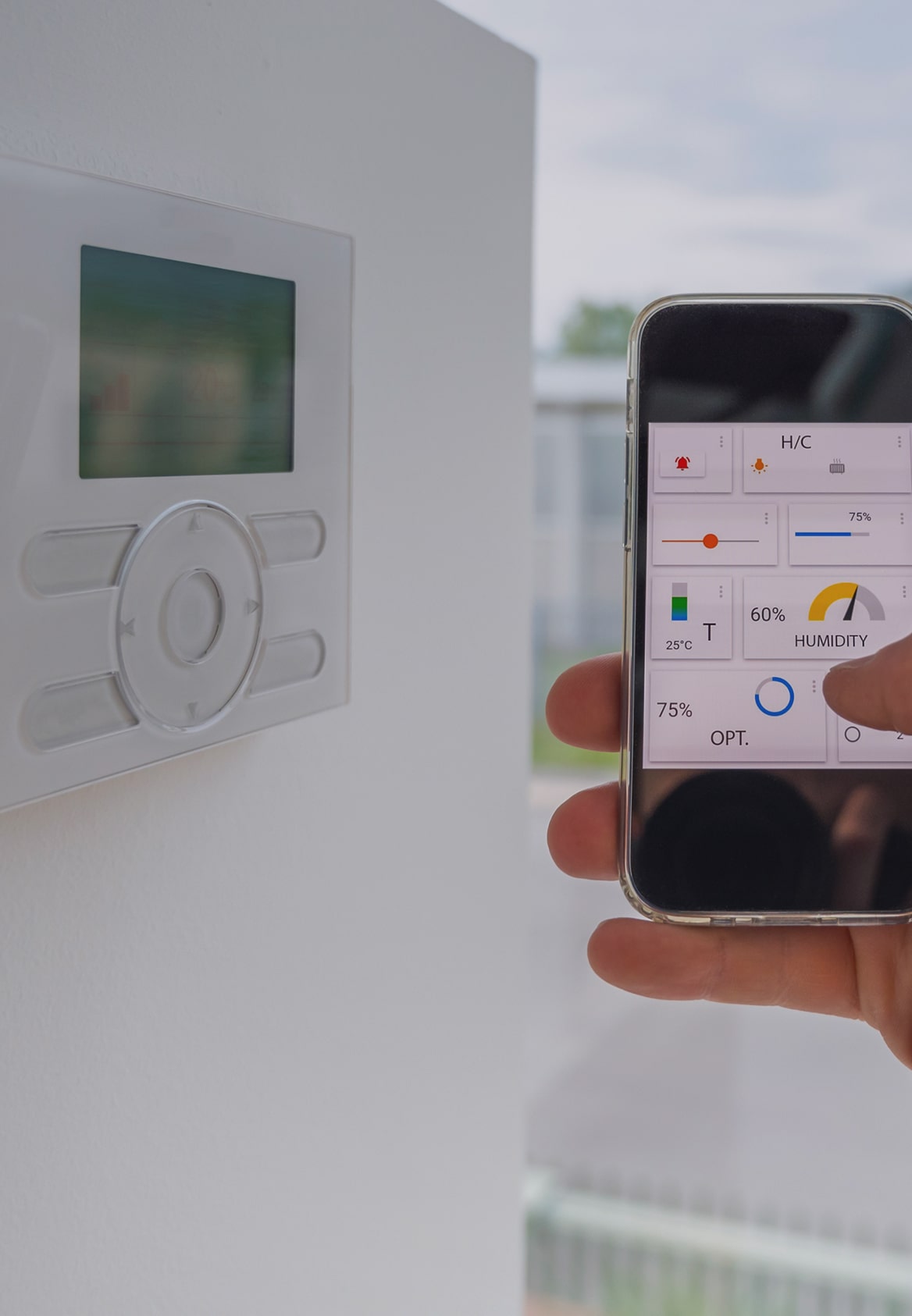
Automate lighting, HVAC, access, and energy management across your facilities from one place. Set it to schedule or let it respond to live inputs automatically. Either way, your team spends less time on manual control.
Asset and inventory tracking devices
Stay informed about where your assets are and how they’re being used across warehouses and supply chains at any time. Reduce losses from missing or underused equipment and give your operations teams a reliable foundation for resource planning.
Edge computing devices
Process data directly on the device when connectivity is limited or latency can’t be tolerated. Your critical operations keep running without depending on constant cloud access.
Predictive maintenance hardware systems
Monitor equipment condition continuously and catch early signs of failure before they become breakdowns. Shift your maintenance team from reactive fixes to planned interventions and keep your operations running on schedule.
Let’s build your hardware solution together
Tell us what you’re working on and we’ll define the architecture, components, and delivery path that fits your product and timeline





Hardware development process with Yalantis

Discovery phase
Our team helps you define what your device needs to do in real conditions and what constraints will shape it from the start. We align on functionality, environment, cost targets, and compliance requirements to decide on the core functionality early.

Architecture design
We design the hardware system based on the actual operating requirements. Our engineers select components and define how parts interact. They resolve compliance considerations at this stage so nothing forces a costly redesign during certification or scaling.

Prototyping
Yalantis builds a working prototype to validate key assumptions early. You can power it on, test it, and see what works and what doesn’t. Fixing problems here costs a fraction of the price you’ll pay after committing to production.

Engineering and integration
We take the validated prototype and turn it into a complete, shippable product. Our engineers bring hardware, firmware, and external system interfaces together and test everything on a system level.

Production readiness
We adapt the design so a factory can build it consistently. Our team resolves manufacturability issues and prepares the documentation your certification process requires.

Scaling and support
Yalantis supports the transition to mass production and stays involved as the product evolves. We help maintain stability, adapt to changes, and improve the device based on real-world performance.
Hardware engineering in-house vs with Yalantis
Compliance as an afterthought
Compliance is tested at the end. Failures force redesigns that push launch by months.
Compliance by design
Compliance requirements are built into the architecture from sprint one. Audits confirm, not surprise.
Siloed hardware and firmware teams
Firmware and board design happen in parallel silos. Integration issues surface late and cost weeks.
One team across both layers
One team owns both layers. Hardware and firmware evolve together, so integration is continuous, not a phase.
Prototype that can’t survive production
Prototypes work on the bench but fail on the assembly line. Yield issues and BOM surprises appear at scale.
Production-ready from the schematic stage
DFM and BOM optimization start at the schematic stage. Production ramp-up is a formality, not a crisis.
Single-source parts and EOL risk
Single-source parts and EOL surprises stall production mid-run.
Built-in supply chain resilience
Every BOM entry has an approved alternative. Supply chain disruptions are a planning scenario, not an emergency.
“A prototype that works on your bench means nothing if it cannot survive an assembly line. We design for the factory from day one, because fixing manufacturability after tooling is ten times the cost.”
– Mykhailo Maidan, CTO at Yalantis

Custom hardware development challenges we solve
High manufacturing failure rates
Prototypes often work in the lab but fail on the assembly line. We apply strict Design for Manufacturing (DFM) principles to eliminate assembly errors and ensure high yield rates during mass production.
Supply chain & component obsolescence
Chip shortages and End-of-Life (EOL) parts disrupt production. We analyze your Bill of Materials (BOM) to select available, long-lifecycle components and design flexible circuits that support alternatives.
Certification delays
Failing compliance tests forces expensive redesigns. We conduct thermal modeling and pre-compliance testing early in the design phase to ensure you pass certification on the first attempt.
High unit production costs
Inefficient PCB layouts inflate costs at scale. We optimize board density, layer stack-up, and component selection to minimize the BOM cost without compromising device performance.
Discover how to make your hardware more reliable with Rust
Our whitepaper breaks down how to adopt Rust for embedded firmware alongside existing C/C++ code, without disrupting production timelines
Why partner with Yalantis for hardware development services
Proven track record in mission-critical domains
With over 17 years in engineering and more than 85 successful hardware projects delivered, we build OEM-grade devices for demanding environments. Companies such as Bosch, Toyota, and RAKwireless rely on our team to solve complex engineering challenges and deliver systems that hold up in production.
Strong hardware ecosystem partnerships
We work closely with technology leaders such as ARM and Raspberry Pi. These relationships give us early access to platforms, reference designs, and engineering support to reduce the risks and speed up development.
Manufacturing-ready design
Our hardware design services prepare your device for real production conditions and consistent manufacturing. We apply DFM (Design for Manufacturing) process to increase yield rates, minimize assembly errors, and reduce production risks from the first prototype.
Certified security & compliance
Yalantis operates under ISO 9001, ISO 13485, and ISO 27001 standards. We design architectures that meet regulatory and security requirements from the beginning, so certification does not turn into a redesign phase.
End-to-end hardware & cloud synergy
We connect hardware with firmware, cloud, and applications into one system. Your device integrates into the broader product without gaps between components or teams.
Designed for profitability
We control costs at the design stage. To maximize your margins, our team selects components, optimizes the BOM, and designs the system architecture with unit economics and scaling in mind.
Hardware development insights

Articles
How to Reduce BOM Costs Without Sacrificing Product Quality
Discover how to reduce BOM costs without sacrificing product quality. Learn how early design decisions and hardware architecture improvements lower manufacturing costs at scale.

Articles
What Are the Key Steps to Designing Medical Sensors?
Designing medical sensors for IoT? Don’t miss this breakdown of hardware, firmware, connectivity, and privacy essentials.
Articles
Digital twin solutions: What forward-thinking executives need to know
Digital twins are changing the game for businesses, from predicting equipment failures to optimizing store layouts. See if this tech is right for you.
Testimonials from our clients








Compliance & certifications

ISO 13485
Medical device quality management
IEC 61508
Functional safety standard
for industrial and electronic systems
ISO 27001:2022
Information security across systems and processes
ISO 27001:2022
Information security across systems and processes
ISO 11898
(CAN) communication standard
used in automotive and industrial systems

ISO/SAE 21434
Cybersecurity standard for road vehicles

UN R155 / R156
Regulations for vehicle cybersecurity and software updates

IEC 62304
Governs the lifecycle of software within medical devices
IEC 60601
Electrical safety and performance requirements
for medical devices
IEC 61508
Functional safety standard
for industrial and electronic systems

CE
Required to sell hardware in the EU

FCC
Required for devices with
electromagnetic emissions in the US

UL
Certification for electrical safety,
widely required in North America.

RoHS
Restricts hazardous
materials in electronics

IPC-A-610 / IPC CID
Standards for PCB design
and assembly quality
Other services we provide
FAQ
-
Can a hardware development company handle the full IoT product cycle?
Yes, a competent company like Yalantis can manage full-cycle hardware development, with software powering the device included in this process. Our team provides comprehensive hardware engineering services and has all the professionals needed to cover the entire IoT product lifecycle from concept to deployment. Our services include requirements analysis, hardware design, firmware development, cloud infrastructure, mobile app integration, obtaining certifications, and manufacturing support.
-
How long does it take for a hardware development company to deliver a finished product?
Hardware product development generally takes from 6 to 18 months, depending on its complexity. Simple products might be completed in under six months, while complex systems can take more than two years. The timeline varies based on requirements, regulatory approvals, manufacturing constraints, and design iterations. Our hardware experts can provide a more accurate estimate after reviewing your specific project needs.
-
What certifications (FCC, CE, RoHS, UL) does my specific product need?
Certification depends on where the product will be sold and what it does. You should consider FCC for radio emissions in the US, CE for safety and compliance in the EU, RoHS for environmental standards, and UL for product safety. Industry-specific certifications might include HIPAA for healthcare devices, automotive standards like ISO 26262, etc. Most connected devices require a combination of these, especially if they include wireless communication or operate in regulated environments. If you want a more accurate list, contact our team to discuss your hardware plans in more detail.
-
How much does it cost to take a product from a prototype to mass production?
Costs vary widely based on device complexity, certification scope, and production volume. A simple IoT device may require tens of thousands of dollars to industrialize, while regulated or high-performance products can reach several hundred thousand due to tooling, testing, and compliance. The biggest cost drivers are redesign cycles, certification failures, and manufacturing readiness gaps, which is why we prioritize DFM and validation.
-
What is Design for Manufacturing (DFM) and why is it critical for my ROI?
DFM means designing hardware so it can be produced reliably, at scale, and at a predictable cost. It directly affects ROI because poor design decisions lead to higher unit costs, production delays, and yield issues. Teams that apply DFM early reduce scrap rates, avoid redesigns, and reach stable production faster.
-
What are the current strategies for electronic component shortage mitigation in 2026?
Component shortages in 2026 remain concentrated around power devices, automotive-grade MCUs, and analog ICs, driven by AI infrastructure and electrification demand. Yalantis addresses these deficiencies from the design stage: we select components with multiple approved vendors, define footprint-compatible alternatives, flag EOL risks early, and build BOM resilience into your product architecture before production problems appear.
-
How is AI-assisted PCB design and simulation shortening development timelines?
Our engineers use AI tools to evaluate routing options, signal integrity, and thermal behavior faster than manual iteration allows. They reduce the number of prototype cycles by identifying issues earlier in simulation. The main benefit is not full automation but faster decision-making during complex design trade-offs.
-
How do you secure IoT hardware against modern firmware and side-channel attacks?
We build security in at the hardware level from the start. Our team implements secure boot, hardware root of trust, and protected key storage as baseline requirements. Yalantis signs and validates firmware with safeguards against rollback and unauthorized updates. Where side-channel exposure is a risk, we shield sensitive operations and limit the physical signals that could leak exploitable information.
-
How do digital twins help in the hardware testing and validation phase?
We create virtual device models that mirror real-world behavior, allowing our engineers to simulate performance across conditions before a physical prototype exists. This approac reduces testing time, exposes edge-case failures earlier, and improves confidence before production.
How to get started with Hardware development
- Set up a free call with our experts
- Tell us more about your project
- Receive a proposal
- We start building your solution
Welcome to Yalantis, please fill out the form and we’ll get back to you.

Thank you for contacting us.
Keep an eye on your inbox. We’ll be in touch shortly
Meanwhile, you can explore our hottest case studies and read
client feedback on Clutch.